The tea whisk: precision from one segment
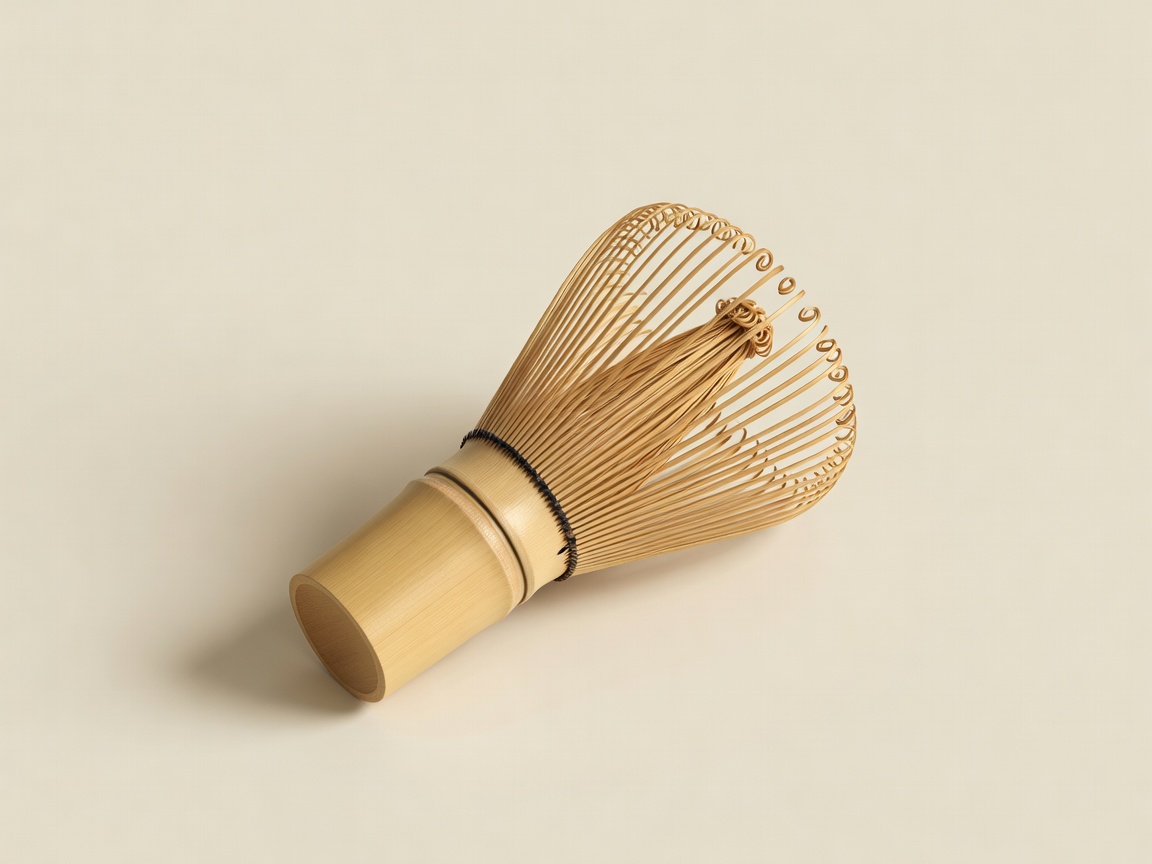
The Japanese tea whisk, or chasen, is perhaps the most concentrated demonstration of bamboo intelligence. The village of Takayama in Ikoma, Nara Prefecture, has long been the best-known centre of production. A maker takes a single section of culm with a node near one end, splits the upper portion into a set number of segments, then subdivides and shaves each into fine tines. The inner tines are curled inward with heat and moisture, and a thread is woven around the base to space them.
Work backward from the finished whisk and the material logic is obvious. The node acts as the handle's anchor, the outer skin gives each tine its springiness, and the straight-splitting fiber allows dozens of tines from one piece. A whisk made of moulded plastic in the same shape loses the very property that whisks the tea: controlled flex.
Laminated trays, boards and utensils
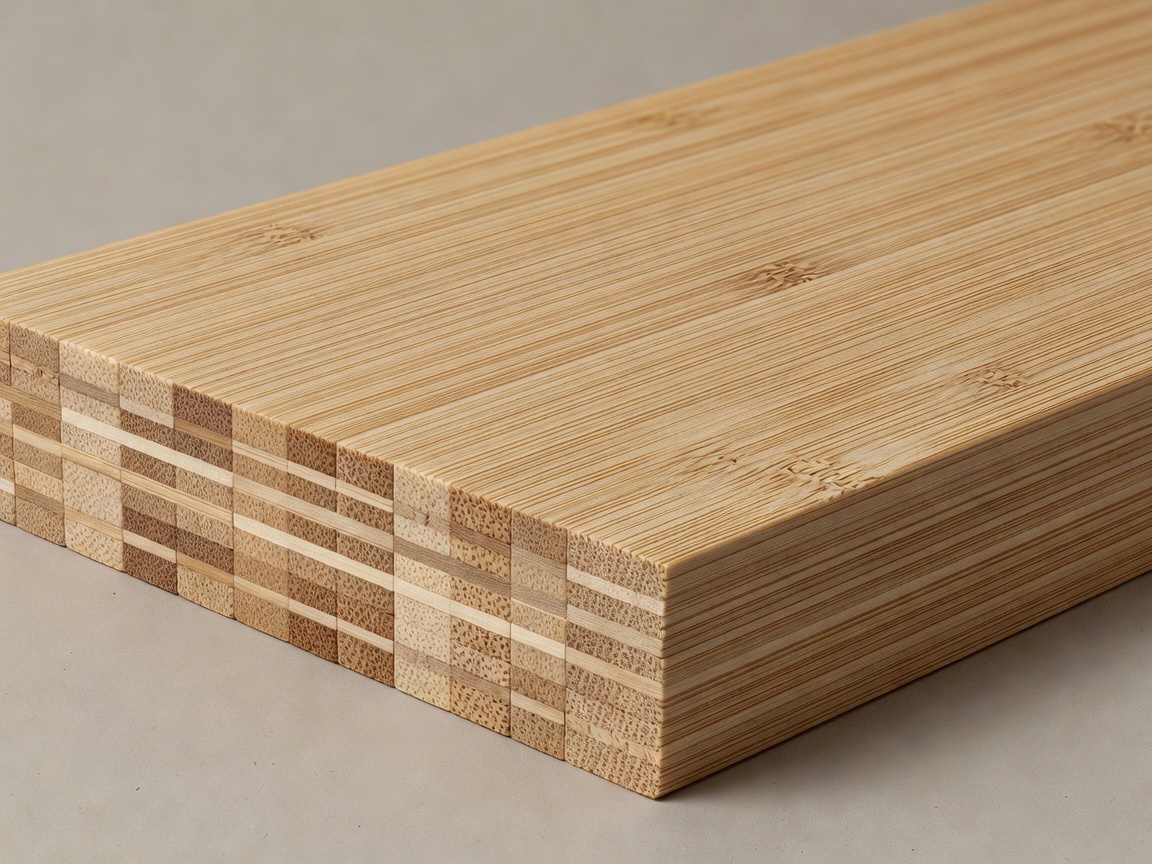
Most bamboo trays, cutting boards and kitchen tools are laminated. Strips are milled flat and glued either side by side with their faces showing (face grain), stacked on edge so the narrow strip edges show (edge grain), or cut and reassembled so fiber ends face upward (end grain). End grain is kinder to knife edges; edge grain is the most dimensionally stable; face grain shows the most visible nodes.
Bamboo's silica content makes laminated boards hard on knives compared with many hardwoods, something rarely mentioned on packaging. Look closely at the glue lines: thin, continuous lines suggest good pressing, while gaps invite moisture and bacteria. Finish with food-safe oil, avoid dishwashers and dry boards on edge.
Woven lamps and baskets
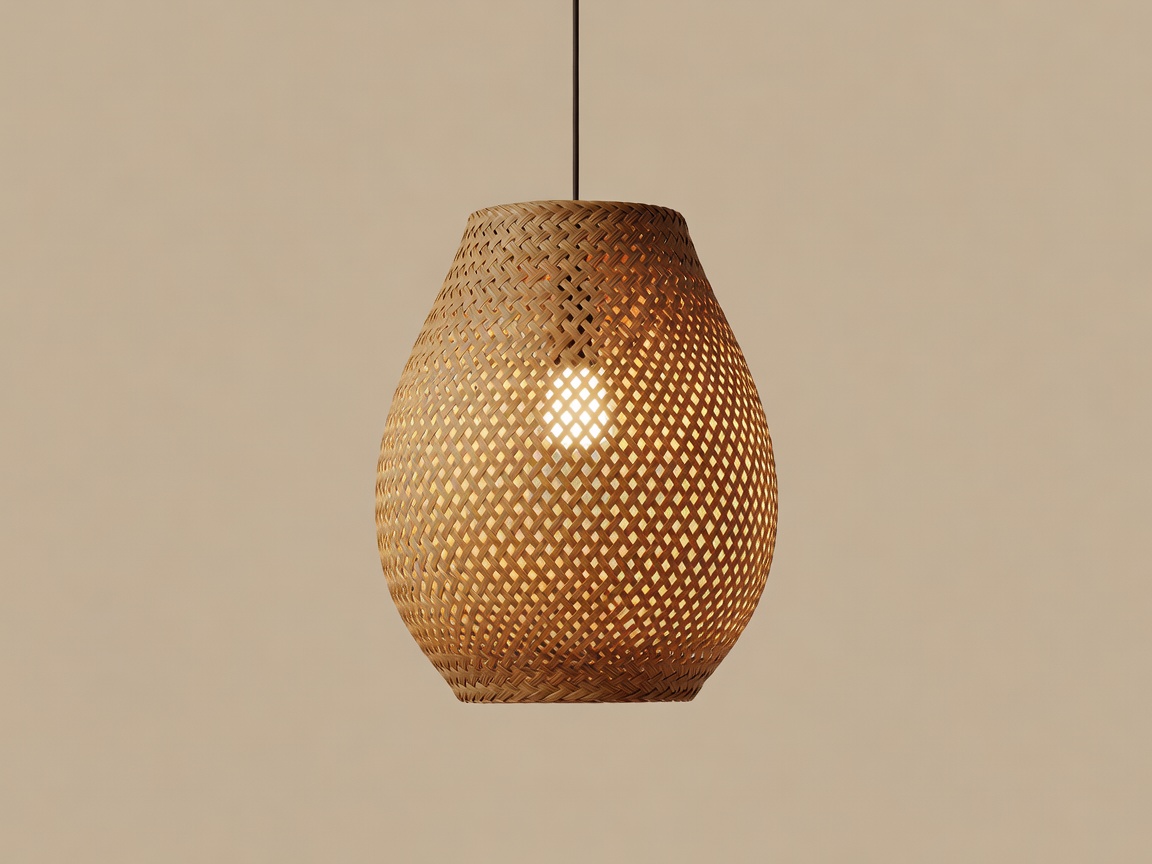
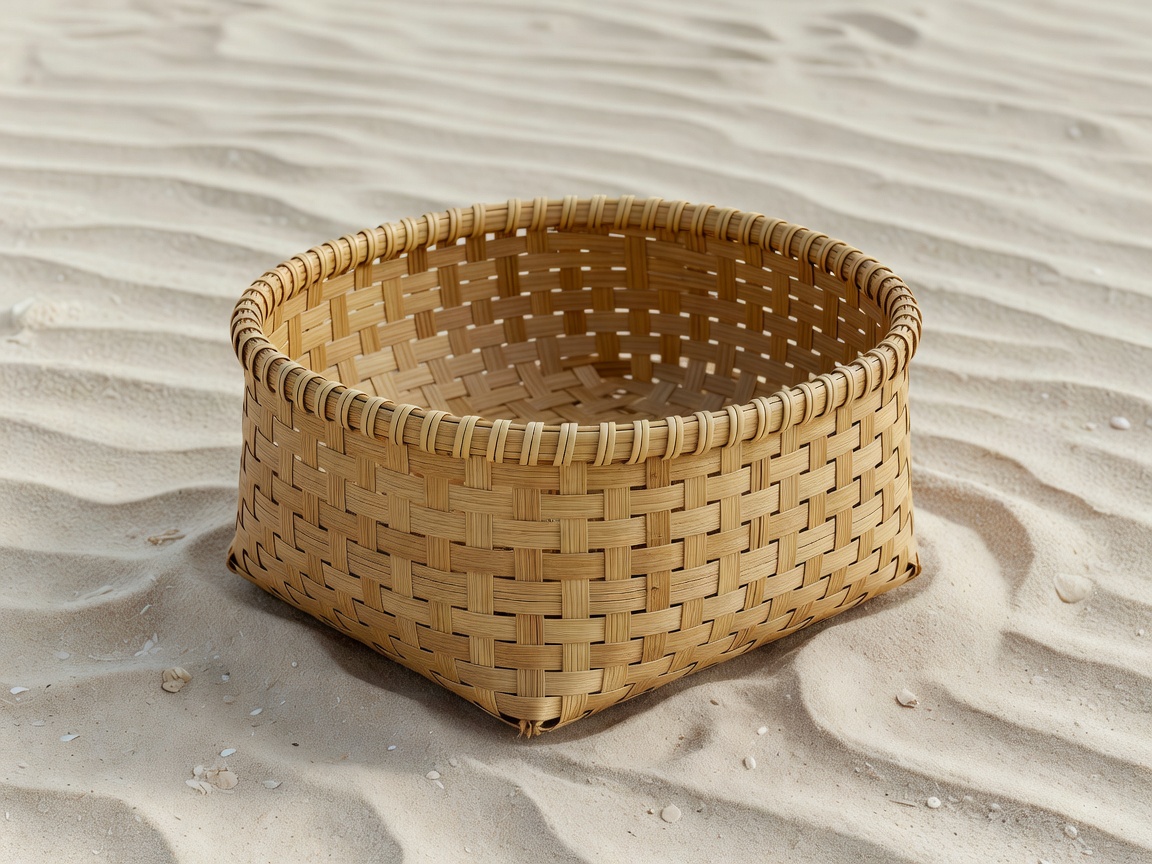
Woven bamboo objects carry their shape through the interaction of crossing strips. A pendant shade can be extremely light yet hold a firm profile, because every strip is pre-tensioned against its neighbours. Light passes through the gaps and through thin strips themselves, producing the warm, patterned glow that has made bamboo shades popular from Japanese lantern traditions to contemporary lighting.
For lamps, the detailing matters more than the weave. Electrical fittings should be separated from the bamboo by an adequate air gap, LED sources run cooler than older bulbs, and the cord entry needs a reinforced collar so the woven crown does not take the full weight.
Claims worth questioning
Not every product labelled "bamboo" behaves like bamboo. Two categories deserve scrutiny:
- Bamboo textiles. Most soft "bamboo" fabric is regenerated cellulose, produced through a viscose or lyocell process that dissolves the plant fiber completely. The resulting yarn no longer carries bamboo's structure. Regulators, including the U.S. Federal Trade Commission, have acted against misleading bamboo textile claims.
- Bamboo-fibre tableware. Cups and plates made from bamboo powder are typically bound with melamine-formaldehyde resin. In 2021 European Union authorities made clear that plastic food-contact materials containing ground bamboo are not authorised under EU rules.
These cases illustrate the core point of this site: the word "bamboo" on a label says nothing about how much of the material's intelligence remains in the object.
Objects shown here are illustrative 3D renders created to explain techniques, not documented products.